Exhibitions
Exhibitions

Juin 2025 « Entre terre et ciel » - Alecia Pradolini et Boubou Ndiaye

Entre terre et ciel

Entre Terre et Ciel est un récit de vie et d’amour entre deux artistes qui foulent la terre du Sénégal. La terre source de vie qui se travaille et se façonne, qui évolue selon les saisons et les intempéries, qui fixe des mémoire tantôts éphémères tantôt pérennes. La terre qui absorbe l’histoire et la raconte. La terre qui modèle les rêves d’Alecia qu’elle fige dans la glaise en autant de paysages, de forêts, de voyages, de mer, de transhumances, d’oiseaux et le ciel. 


La terre qui vibre sous le choc des premières gouttes d’eau, qui s’imprime des sillages de la pluie et tisse des trames sur le sol. Boubou s’inspire de ces messages mystérieux qu’il refaçonne et restitue en autant d’objets emprunts de symboles et d’énigmes qui mimétisent la perfection de la nature et de ces traces.


C’est un travail minutieux, évolutif, à la fois complémentaire par la matière et différent par la restitution. Le sens ou les sens de la terre. La terre c’est le principe féminin, c’est la partie qui accueille, qui absorbe, qui accepte. La terre c’est le Yin. Le ciel qui nourrit la terre d’eau et de lumière, c’est le Yang. Une combinaison qui s’équilibre. 


Boubou et Alecia avec leurs travaux qui s’équilibrent et transmettent la force mutuelle du collectif.


Les œuvres du collectif sont réalisées en terre de Thiky. C’est un mélange de terre rouge, verte, noire, violette et de kaolin. Alecia a une préférence pour la terre mauve et Boubou la terre verte. La cuisson à 1200 degrés donne une consistance rugueuse aux pièces d’Alecia, alors que Boubou opte pour un finissage lisse et brillant. Les œuvres d’Alecia sont fortes et sobres, celles de Boubou arrondies et douces. 


Ils sont à la fois yin et à la fois yang. 


Liberté/Uhuru

Evanson Kangethe

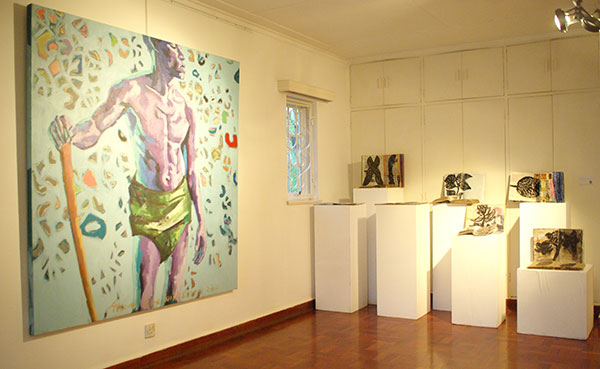
L’histoire de l’indépendance du Kenya continue. Evanson Kangethe, artiste autodidacte kenyan, nous dévoile un nouveau volet de l’histoire de l’indépendance du pays : Uhuru. Evanson, qui a séjourné avec les derniers survivants Mau Mau à Nyeri, nous raconte leurs histoires de résistances, de luttes d’oppression et d’amitiés.

En 1942, les soldats italiens prisonniers des Britanniques sont transportés d’Ethiopie au Kenya. Les hommes sont partagés dans 11 camps et y passent plus de 6 ans. De 1942 à 1947 le pouvoir colonial utilise la main d’œuvre italienne pour construire les routes et les infrastructures du pays. Après le départ des Italiens les camps sont maintenus par le pouvoir colonial où sont détenus les prisonniers de droit commun et les opposants à l’Empire britannique au Kenya.

La révolte des Mau Mau est un mouvement insurrectionnel du peuple Kikuyu qui se structure en 1950 afin de résister à l’occupant Britannique. L’état d’urgence qui suit cette résistance verra plus de 100 000 insurgés et civils tués et plus de 300 000 Kikuyu détenus dans ces camps où les conditions sont violentes et inhumaines. 

63 ans après, le jeudi 6 juin 2013, le gouvernement britannique a présenté ses « sincères regrets » aux vétérans de la révolte des Mau Mau, et a annoncé une procédure d’indemnisation des survivants pour les tortures qui leur ont été infligées. 

Evanson résiste. Le temps n’effacera pas les traces, les témoignages. Il questionne les survivants Mau Mau, écoute les récits, les souvenirs et les illustre sur papier carton recyclé. C’est une fresque de ce qui devait tomber dans l’oubli. 

Evanson vit a Limuru sur les hauts plateaux au nord de Nairobi. Il est proche de son peuple de sa terre. 


L’exil forcé ou nécessaire

L’exil de Bernard Guillot. 

Bercé par les histoires et la mythologie du bassin méditerranéen, Bernard est le grillot venu de la berge nord de la mer. Dans « Chaque pays à ses chansons » Youssou Ndour choisi la musique comme l’un des plus grands dénominateurs communs culturels : la tradition orale du grillot qui porte ses chants et ses histoires par monts et vaux, au-delà de l’horizon.

Les contes et les histoires voyagent et Bernard illustre l’odyssée de tant d’âmes, de ces peuples qui se déplacent depuis des millénaires avec leurs histoires. L’aventurier qu’il soit grec, étrusque ou sénégalais quitte une berge vers un nouveau monde, s’exilant vers une terre promise, nourris de contes, de légendes et de rêves. 

Bernard a fait ces voyages et porte avec lui un savoir immense tissé de lyrisme, d’expériences et de connaissances.  L’érudit raconte, transmet, exprime dans ces langues qui appartiennent aux autres horizons et, comme pour la musique, celui qui prête l’oreille, celui qui écoute ou qui entend, prend ce qu’il souhaite prendre. 

Sa peinture est une fresque ou seule la matière est figée. Il faut du temps pour comprendre mais il ne faut qu’une seconde pour s’éblouir.

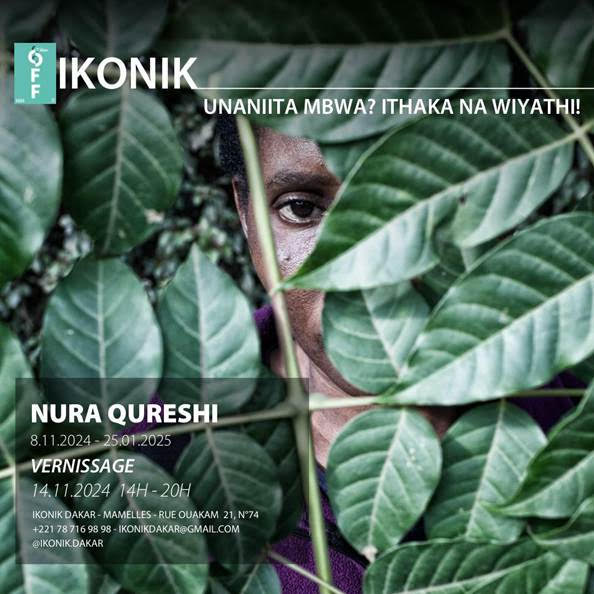
UNANIITA MBWA? ITHAKA NA WIYATHI! 

En 1963, le Kenya obtient son indépendance de la Grande-Bretagne après une longue lutte pour sa libération connue sous le nom de « rebellion Mau-Mau ». Terre et liberté, ithaka na wiyathi est l’histoire ou le récit du peuple Kikuyu que Nura Qureshi explore avec respect en réélaborant la transmission orale, ses traces et ses conséquences.  

À l’aide de mises en scène, de photographies argentiques et numériques, de paysages et de portraits, cette série explore les symboles de ce combat volontairement oublié après l’indépendance. 

Unaniita mbwa, tu me traites de chien? Provocation ou héroïsme rappelée dans les œuvres littéraires de Ngũgĩ wa Thiong’o.

L’exposition, présentée dans le cadre de la Biennale Off de Dakar, se tiendra du 8 novembre 2024 au 25 janvier 2025.

VERNISSAGE le 14 novembre 2024 de 14h à 20h. 

IKONIK Dakar 

Contact : +221 78 716 98 98

The Land in Between…

PAST/PRESENT/FUTURE

Curated by Samantha Ripa di Meana

For more information : [email protected]
By appointment only tel:+254735884166

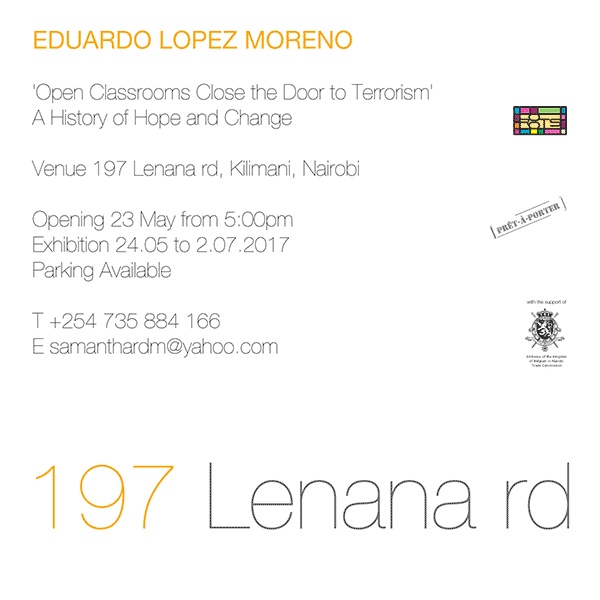
Open Classrooms Close the Door to Terrorism

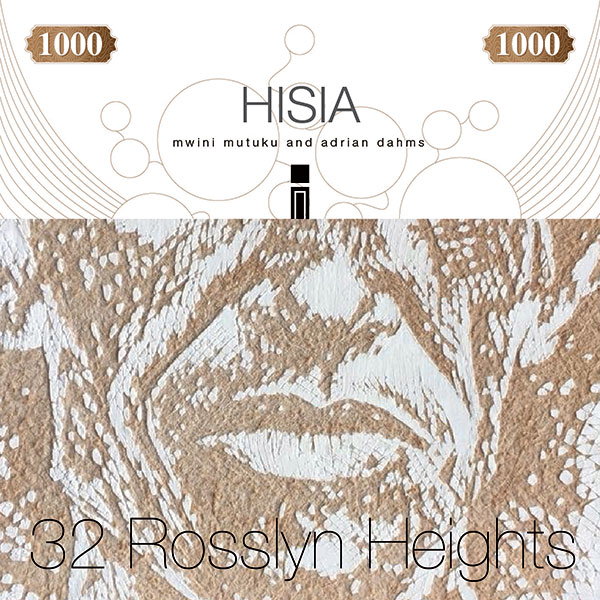
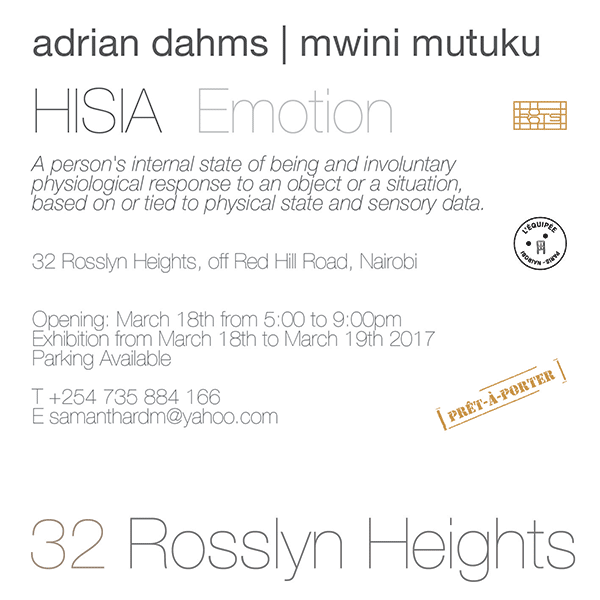
HISIA / EMOTION

Mwini Mutuku / Adrian Dahms

Doing away with the emotional management handbook handed to us as children, Mwini Mutuku and Adrian Dahms invite us to explore their respective emotional realms. Dahms’ Emotion Series is an unflinching examination of the most perilous of human emotions: sadness and anger. Mutuku’s Frequency is a quiet conversation with his audience about the affective terrain of being an artist. Together, they propel us, at a speed too high for comfort, towards empathy. First, with the artists, and ultimately, with each other.

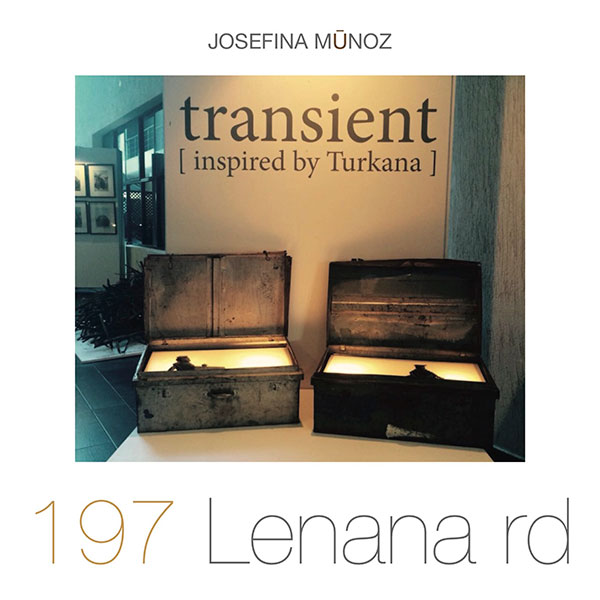
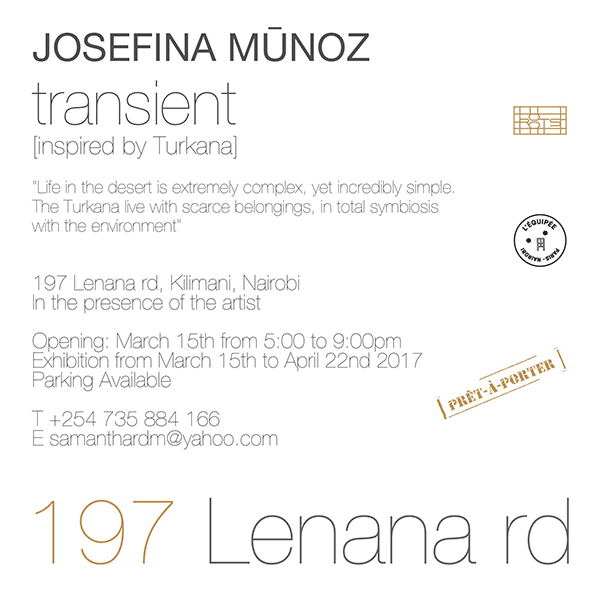
TRANSIENT

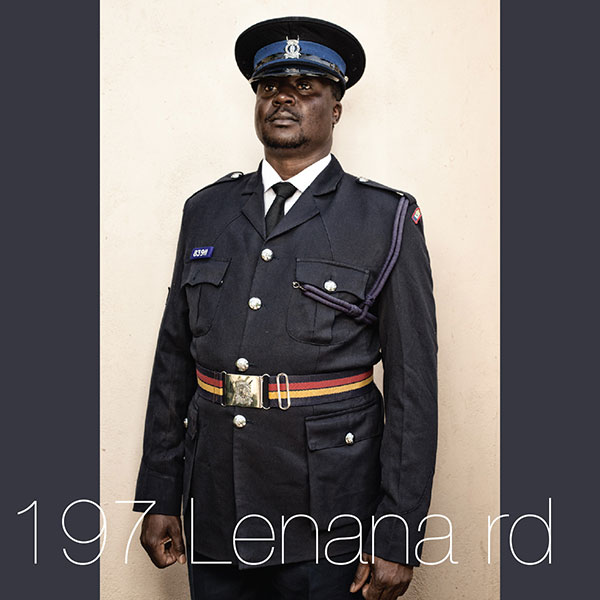
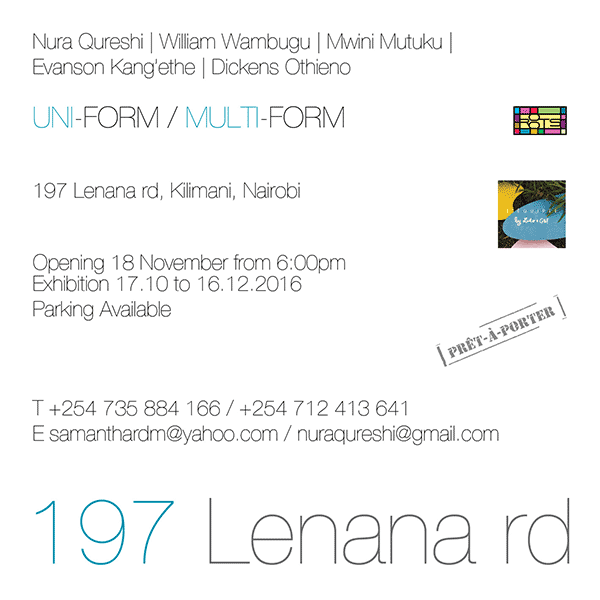
UNI-FORM / MULTI-FORM

UNI-FORM/MULTI-FORM (or mistaken identity)

As Ghanaian philosopher Antony Appiah tackles in his more recent books, the problem of our time is a problem of identity. In the same way Europe, Asia and American, Kenya is facing the same question. As every African country, identity, lies in a post-colonial reconstruction of the culture.

We can quickly get mistaken by appearance and believes. In Kenya the use of uniforms is widely spread, accepted and rooted in the culture. This practice of cloth distinguishment was brought by the colonisation in opposition to the use of traditional ethnic apparats. The uniformizing of the Kenyan Nation resulted in “Technical Identity”.

The definition of uniform has many shades:

  1. particular set of clothes that has to be worn by the members of the same organization or group of people,
  2. having always the same form, manner, or degree: not varying or variable <uniform procedures>,
  3. consistent in conduct or opinion <uniform interpretation of laws>,
  4. of the same form with others: conforming to one rule or mode,
  5. consonant, presenting an unvaried appearance of surface, pattern, or colour.

The uniform is a cultural expression that needs to be explored. It came to every civilization with the organization and distribution of tasks and implied a certain degree of acceptance and compliance. It loses its meaning with the growth of education.

Did Kenya benefit from the uniformizing of its people? What does a uniform means to you?

Please give us your view and write to us at the e-mail address [email protected]

.

SARNEVESHT-DESTINY

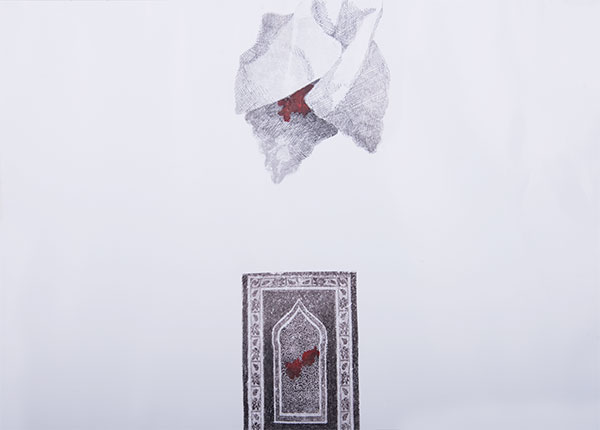
Destiny I

I was brought up by secular parents, in a Muslim country. What I was taught in school contradicted dramatically from how my family operated. I grew up with many questions about my identity and status as a woman. These questions still inspire me to explore culture, traditional beliefs and the religion I was meticulously taught in school.


Destiny is a visual journey to investigate the influence of religious beliefs on status and treatment of women. It explores the ways by which womanhood and gender roles are defined in a society that bases its moral codes on religion.


This series borrows visual elements from classical Greek art, Persian miniature, old tapestry and architecture. These elements are removed from their initial context to serve a contemporary objective narrative about women.

Destiny deals with questions such as:


Who is the contemporary woman?
What are her rights?
Do men and women have equal rights?
Is Hijab a form of protection?
What are our responsibilities (as Men and Women) towards treatment of women?

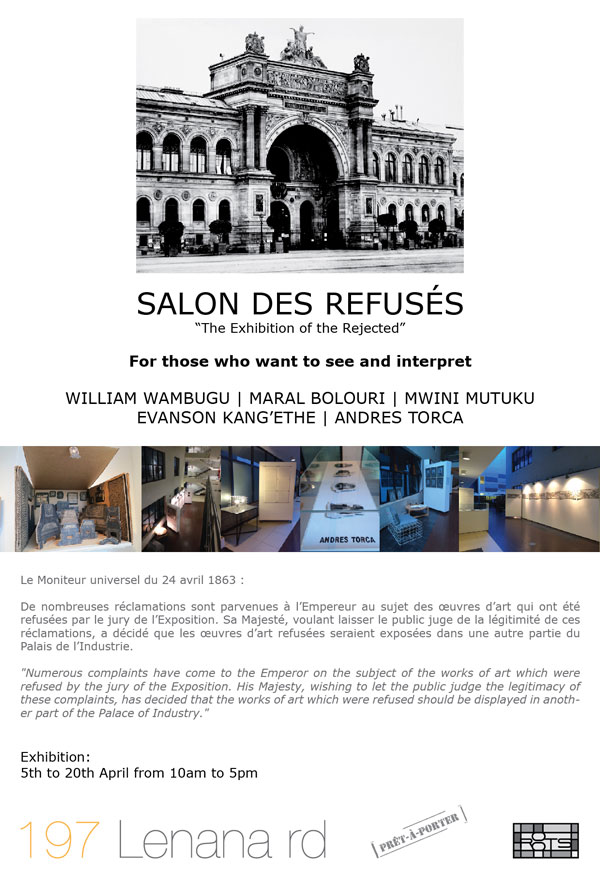
Salon des Refusés

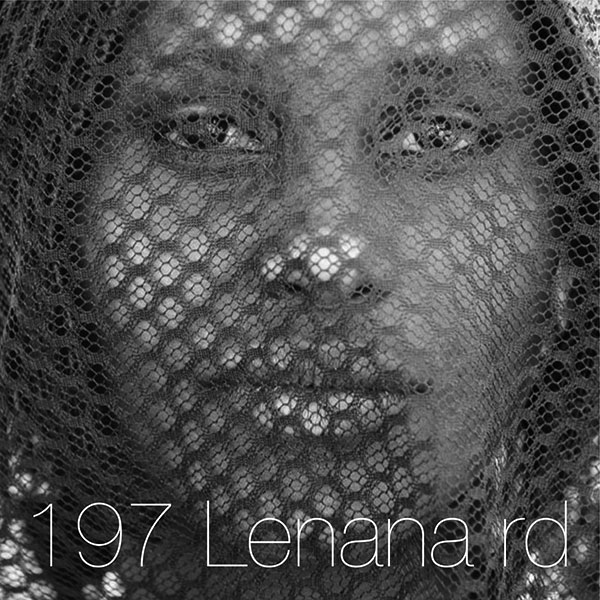
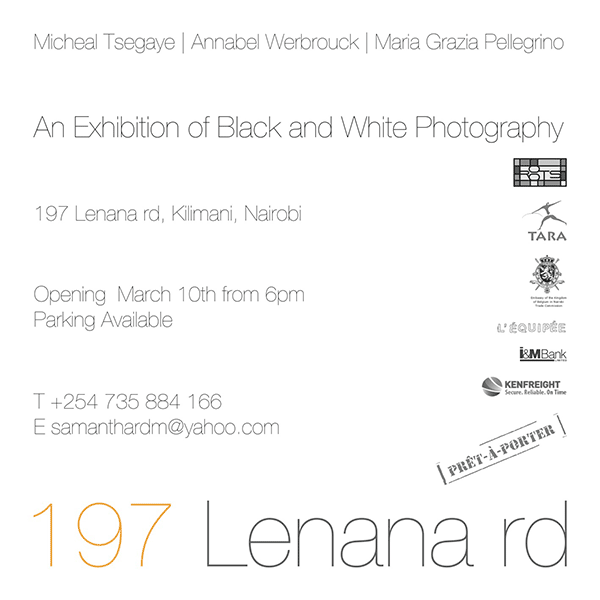
An Exhibition of Black and White Photography

Opening March 10th from 6pm

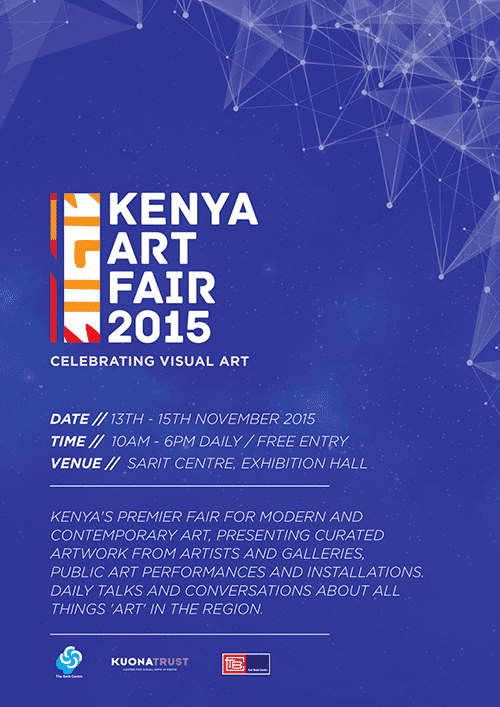
Kenya Art Fair 2015

From 13.11.2015 to 15.11.2015

REGARDS...

From 11.02.15 to 28 02 2015

 Prints on Aluminium Dibond

« I have always perceived photography as a source of eternal vitality. All senses are mobilized. This is what gives an oxymoronic shape to the image. It enables to communicate its subjectivity thought the lens. Each image is telling a story, makes you travel in time and helps crystallising the moments of the past. As if you where breathing, each photo is catching the essential instant : the very moment that will become a memory. »

[email protected]

About beauty and other things…

From 06.06.15 to 01.07.2015

@ CREA HOUSE
Fitsum Behre Woldelibanos, Sam Hopkins, Ray Piwi, William Wambugu, Evanson Kang´ethe and Expedito Mwebe

[email protected]

In transition

From 15.11.14 to 10 01 2015

Awakening Kenya

Roots Contemporary

Presents

William Wambugu, Evanson Kang´ethe Njuguna and Ray Piwi


AWAKENING KENYA


From 13.09.14 to 25.10.14


Opening 13.09.14 from 12 to 6pm

CREA HOUSE-NAIROBI

William, Evanson and Ray are 3 artists using very different media. They represent the wide diversity of the upcoming Kenyan scene. William is a conceptual artist who works with ink on paper. He’s presenting the installation of old scrap books “Hamsini-Fifty” shown at the Goethe Institute last year. As usual his work is the reflection of an evolving society who he analyses and categorizes like an anthropologist. Ray is a new young photographer who creates images of a great depth. In this series of works, he depicts Kenyan and South African women with the weight of the world that surrounds them. Although he is new on the Kenyan art scene, he has already won several prizes-World Bank, Nikon- and a scholarship in South Africa. Thanks to his perseverance he has managed to transform his hard working childhood into a successful story.Evanson on the other hand is an artist of the “Old generation” who has managed to evolve and diversify. The works chosen for this exhibition are drawings of everyday life in Nairobi with a trivial sense of humor.

All 3 have in common their passion for work and have chosen art as a way of life. They have a humble approach that gives them strengths, power and independence.

Venue: CREA HOUSE
Off Lower Kabete (see map)

Curated by Samantha Ripa di Meana – [email protected] 

tel: 0735884166

Organized by ROOTS CONTEMPORARY Brussels 

Open by appointment only

Tel: 0735884166

A room with a view

RUSSIAN FORBBIDEN ART

17/11/2012 to 26/01/2013 in Brussels
Serigraphs

From the original V. Skersis 1975


Serigraphs of the most well known artists of the SOTZ ART
Group PG
Vitalij Komar and Aleksandr Melamid
Aleksandr Yulikov
Rodislav Lebedev
Viktor Skersis


“Forbidden Art or Sotz-Art”
Is a politicaly engaged art
sanctions against non-conformist art


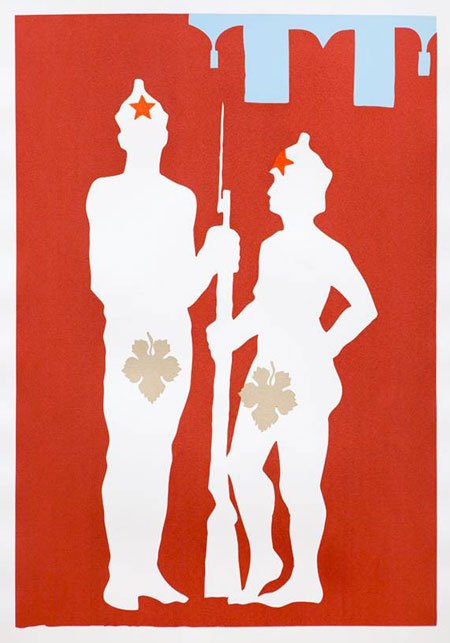
Roots Contemporary présente une série de sérigraphies de grands noms de l´Art Interdit russe. Les sérigraphies ont été sélectionnées par l´ancien Commissaire d´exposition, très controversé, de la Galerie Tretyakov, Andrei Erofeev. Certaines d´entre elles ont été censurées par le gouvernement Russe a l´occasion de l´exposition « Art Interdit » en 2007. Mr Erofeev a été condamné pour diffamation en 2010.
Un défie


Open every saturday from 14h to 19h or by appointment 0474611263


 33 rue du College

1050 Bruxelles

Tel: +32 474611263

A room with a view

Presents a unique piece of

Yang Hui-Bahai

Pinceau Chinois (5) nov 2010
Size: 238,8 X 177,8 cm
Acrylic on Canson paper

Open on Saturday from 2 to 5pm Or by appointment

 33 rue du College

1050 Bruxelles

Tel: +32 474611263

Seats of Power

Opening 13/06 at 18h00

In the presence of the artist

Venue:

33 rue du College

1050 Bruxelles

Tel: +32 474611263

For more information please contact [email protected] or [email protected]

William Wambugu is a young emerging Kenyan artist. He has been gaining reputation and experience trough his repeated shows in the last 2 years.

He was trained at art and design school and followed workshops and extra art lessons where he forged his truly personal style. He lives through his art instead of just practicing it. He explores his personal world and perceptions like the kaleidoscope of human kind. Out of each detail he deducts a universal comprehension of the world he is living in…

I have only what I remember

I have only what I remember 


Displacement is at the core of Xavier Verhoest’s current work. After the post election violence in Kenya in 2007, hundreds of thousands of people were displaced within the country.

The artist who has been living for 15 years in Kenya created a body of work inspired by displaced people now living in a land between memory and amnesia. He wished to go back to the origin of their journey and transformation. For them, memory loss is a generational and individual issue….

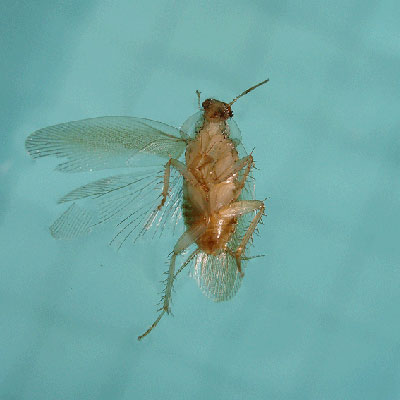
Dead Insects in my Parents Pool

At first glance they seem almost like scientific specimens, removed from any obvious environment, carefully and obviously composed. However, when contextualised by the title, the idea is that they start to tell a story, to document, albeit somewhat obliquely, the context of having water in a country where many people do not. It is both tragic, but also absurd, that in Kenya many people do not have enough water to drink yet some have enough to fill swimming pools with. However, rather than tell this story through images of drought and opulence, I focussed on drowned insects in a swimming pool. The idea is to acknowledge this wealth chasm using strategies of irony and scale; the insects, but to also acknowledge my own presence within the context; the title…

Walks of life

William is a young artist who, this year, has been scrambling up the art scene. He was trained at art and design school and followed workshops and extra art lessons where he forged his truly personal style. As a Kuona Trust artist, he managed to reach a broader public and was noticed by many.

He lives through his art instead of just practicing it. He explores his personal world and perceptions like the kaleidoscope of human kind. Out of each detail he deducts a universal comprehension of the world he is living in.

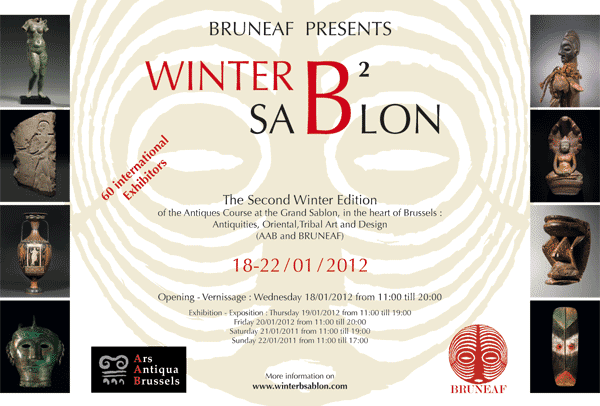
Winter B Sablon 2

Avec le soutient de :

As Africa moves into globalisation 7 Kenyan artists explore the transformation of their country and the clashes between traditions and modernity.

Xavier Verhoest, Sam Hopkins, Miriam Syowia Kyambi, performing artist Ato Malinda Abe, James Muriuki, Expedito Mwebe, William Wambugu.

Déplacés

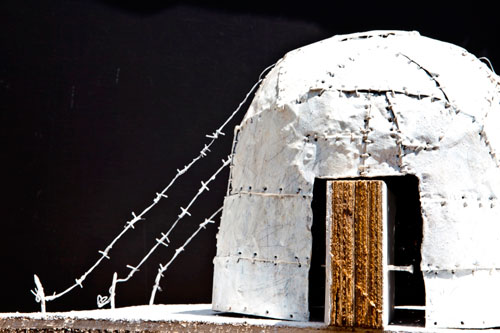
Nous sommes tous déplacés. Les tentes abritent notre seule possession : une mémoire. Les barbelés fixent nos bribes de vie au sol. Nous n’y adhérons pas. Nous sommes d’ailleurs. Nous sommes des pays de voyage où les bras se tendent vers la fraîcheur de l’air et les ondes d’une ville et touchent les mots de nos rencontres et de nos amours. Nous déployons nos souvenirs sous les labels : réfugiés, bailleurs, blindés et miradors. Les ouvertures nous renvoient à nous-mêmes. Les étoiles n’indiquent pas de chemin. Le ciel est la limite…

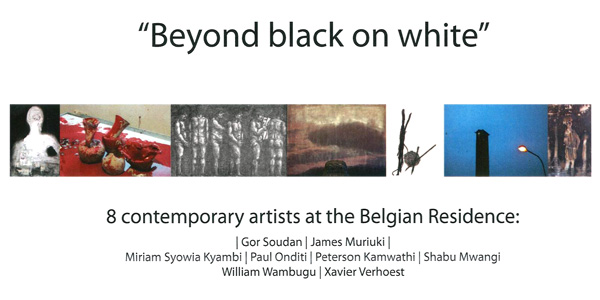
Beyond black on white

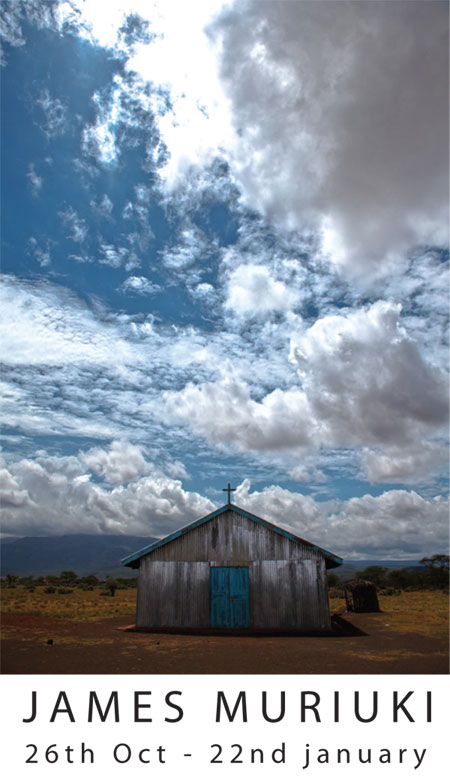
In transition

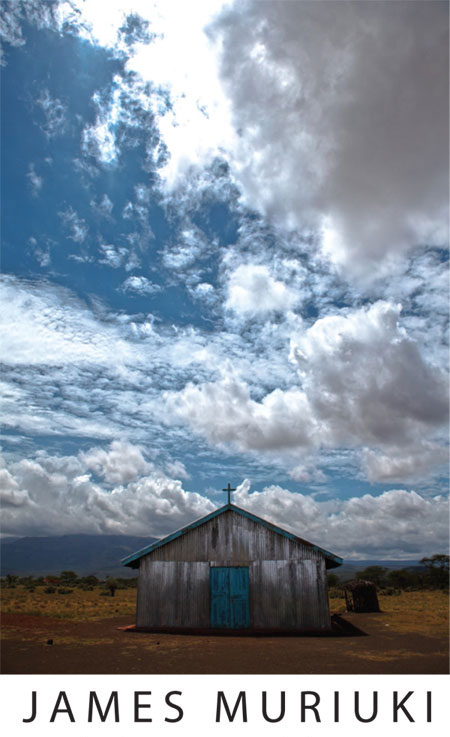
 James Muriuki

Opening 26.10.2011 at 18h00

This exhibition presents James’s work in progress. It is his engagement with a city and by extension a country in transition. A transition that has been expected for long. Recent strides in business opportunities with the east, consumer spending, inflows of currency from the Diaspora and other factors fueling it.

Many streets and neighborhoods in Nairobi are being transformed every day by its shifting architecture. In the last few years road infrastructure set the pace for expansion and land prices sky-rocketed as developers and speculators go for every available square foot. There are many that are left out relegated to spectators. They hear and read about development statistics, and work on the very spaces that generate the statistics…

Sediments of Time / Landscapes of Sound

Roots Contemporary

Invites you to the exhibition

Sediments of Time / Landscapes of Sound

 Jason Corder

24.09.2011 to 13.11.2011

Private viewing September 24th from 4pm
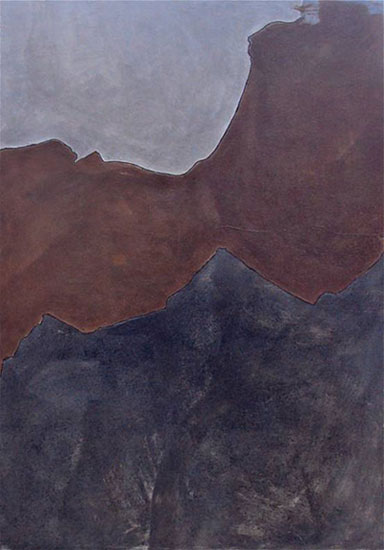
Born in San Francisco (1969) Jason Corder has worked in France, Ireland, Senegal, Ethiopia and now lives in Kenya.  Nominated in 2008 for the Sovereign European Art Prize, he was also awarded a Ballinglen Fellowship.

 read more

Visits by appointment only tel: +254 735884166 or +254737097591

r o o t s  c o n t e m p o r a r y
Kirawa Close, Off Lower Kabete
[email protected]

Brussels Oriental Art Fair

Artist: Shen Fan
Shanghai, China
Oil on canvas
98 x 32 cm
1998

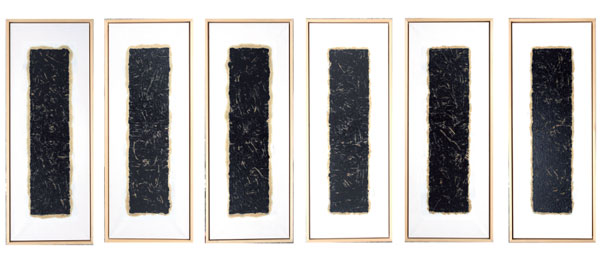
Shen Fan attended the Fine Arts Department of the Shanghai Light Industry Institute in the late 80’. In the 1990s, he became one of the first Chinese artists to be invited overseas, studying at the European Ceramics Work Centre in the Netherlands. He explored walsh technique and oil painting on paper and then on canvas to become one of the major Abstract Artist of the Shanghai art scene. The works after 2000 takes up an idea the artist was already pursuing in 1994. He was hoping his works would be interpreted as an abstraction of calligraphy.

Shen Fan’s most recent work has made use of neon lights to create large installation works. The first of these was shown at the 2006 Shanghai Biennial. Landscape: A Tribute to Huang Binhong (1845-1955) was a five-by-ten meter neon light installation set to the slow plucking of a traditional Chinese musical instrument, the zither. Joe Martin Hill in the December 2006 of Yishu Magazine commented that this work was worthy “to contemplate the weight of history and its contemporary reformulation”.

Born in 1952, lives and works in Shanghai and is one of the main figures of Shanghart Gallery.

 read more

Exhibiting at 53 rue Lebeau, 1000 Brussels

[email protected] ou [email protected]

Special from BOAF

 Press Article

Rue du collège 33 brussels 1050 Brussels

[email protected]

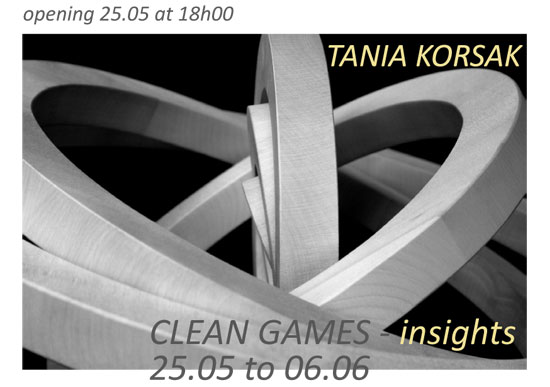
CLEAN GAMES - insights

L’art est dans le regard de celui qui pense et qui touche. Au travers d’objets ludiques de formes archétypales, se dévoilent de manière singulière des oeuvres de la galerie Roots Contemporary. Tania Korsak, anthropologue, questionne et sollicite l’artiste qui sommeille en chacun de nous. Cette installation insolite sonde les moyens de percevoir le réel et révèlent la capacité créatrice de chacun, concepteur et promoteur de son regard et de son histoire.

 read more

Exposition du 25 mai au 06 Juin

Vernissage mercredi 25 mai à partir de 18h00

[email protected] ou [email protected]

La terre nous est étroite

 Xavier Verhoest

« Comment puis-je me retrouver et cerner des bribes de mon identité individuelle tout en me dissolvant, en quelque sorte, dans l’éther des nuages, la surface d’une plaine neigeuse ou d’un océan ? Comment l’individu entre-t-il en résonance avec l’infini des éléments, de l’univers ? Comment le Moi communique-t-il avec le Monde ? »

 read more

By appointment only

Kirawa close, off Lower kabete, Nairobi

Tel : +254 721 842 231

[email protected]

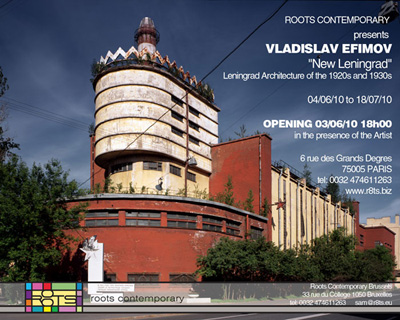
New Leningrad

 Vladislav Efimov    Press Article

Vladislav Efimov s’est toujours intéressé aux objets, tant comme artiste conceptuel que comme photographe.

Lors de sa toute première exposition en 1991 à Moscou (Galerie Shkola), il présenta une série d’objets sous forme d’images. Plus tard il se tourne vers de objets réels, plutôt que leur représentation, auxquels il faisait subir d’étranges transformations  dans ses installations interactives, tout cela tenant plus de l’alchimie et de la  mythologie de la science que de contes de fées. Son art s’élargit peu à peu, passant  de la « photographie de chambre » à des formes moins traditionnelles telles que la vidéo et le son.

L’artiste russe vit et travaille à Moscou. Il s’est toujours investi dans de petits espaces  dans lesquels il s’entoure d’une multitude d’objets : de vieilles choses inutiles ou démodés aux gadgets les plus sophistiqués. De ce lieu étrange où il vit, apparaît un chaos romantique mélangeant à une hybridation créatrice.

Efimov s’étend dans son parcours professionnel: de l’ingénierie à la photographie professionnelle en passant par les nouveaux médias, l’art vidéo et l’art conceptuel. Il travaille en collaboration avec deux experts en numerique, Aristakh Tchernichervski

(Moscou) et Sergei Denisov (St-Petersbourg). En même temps, il se fait un nom en tant que photographe pour la presse spécialisée en architecture. Diplômé au «Moscow Institute of Mechanical Engineering », il reçoit une bourse ainsi qu’une subvention spéciale pour l’Académie des Arts de Berlin ; deux fois lauréat pour le Grand Prix au « Extra Short films Festival, Novosibirsk » dont une il est récompensé pour la vidéo (2001) et l’autre pour l’animation (2004). En 2009, Efimov gagne le prix Innovatsia pour le meilleur artiste russe avec son projet sur la radio et la liberté de parole.

Ses travaux ont été exposés en Europe (France, Angleterre, Italie, Espagne, Allemagne, Autriche,…) et aux Etats-Unis dans les biennales et festivals internationaux, musées et centres nationaux d’art contemporain.

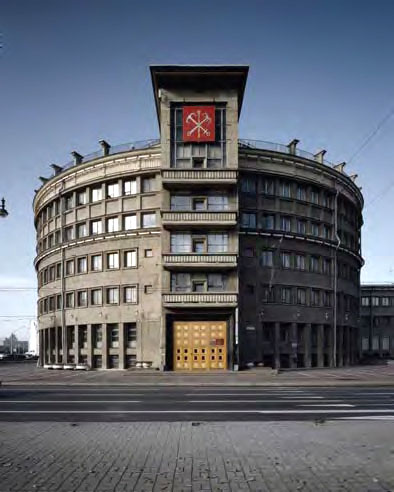
En tant que photographe, Efimov entreprend un long travail de répertoriage de l’architecture constructiviste de Moscou, de St-Petersbourg et d’autres villes russes.

L’exposition intitulée « Le Nouveau Leningrad » présentée la première foi a Moscou au NCCA en 2009, consiste en une série de photographies et de boites lumineuses formant un parcoure visuel, tactile et auditif.

 read more

Exposition du 31 mars au 15 mai

Vernissage mercredi 30 mars à partir de 18h00

Contact : Annuschka Leung +32 474 611 263

[email protected] ou [email protected]

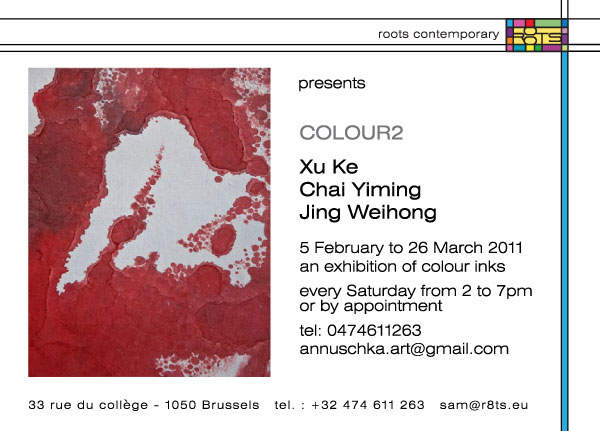
COLOUR2

 Xu ke  Chai Yiming  Jing Weihong

Interior Fujian

 Patrizia Bonanzinga     Press Article

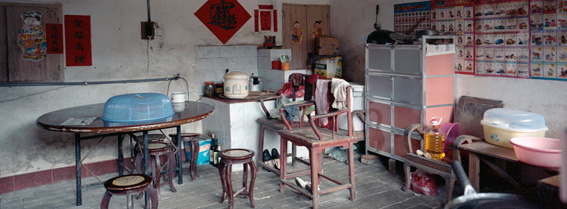
Interior Fujian is a solo exhibition of the photography works by Italian artist Patrizia Bonanzinga. The photographer has been working in China since 1995. In 2004 she published The Road to Coal a photographic work on Chinese coal industry. Over the last years her central thread is about “time”. Interior Fujian is a series from her last trip to China in May 2010. Using her XPAN camera she went into the Tulou, huge round fortified houses of Hakka people, shooting interior landscapes. Seizing pithy, straightforward, human images, she wonders about her perception of the flow of time. Inside the Tulou, China seems timeless.

Lately, China is living a frenetic race to make up for lost time. The realistic images scattered by the XPAN capture the real rhythm of time in the Tulou. On the other hand, today’s China prevents the natural flow of time. From the literature of the Tang dynasty to our days, nothing has changed in the dwelling mode of most of Chinese people. Only the Cultural Revolution of the 60’s could have moved the essential place of objects and people. The photographer has gone deep down to the soul of the country, chasing the sense of China from Shanxi to Fujian. As China moves on, traditions remain…

Patrizia Bonanzinga : www.patriziabonanzinga.com

 read more

Siberian Diary

 Irina Zatulovskaya    Press Article

Irina Zatulovskaya, artiste russe confirmée, née à Moscou en 1954, dessine et écrit des poèmes à l’âge de cinq ans. Elle entre à l’école élémentaire artistique de Krasnaya Presnya et suit en parallèle des cours d’art au Musée National des Beaux-Arts Pouchkine. Diplômée de Moscow Polygraphic Institute, elle rejoint en 1979 le Syndicat des Artistes Soviétiques. 1987 est l’année où Zatulovskaya commence à travailler sur des planches de bois et des fragments de tôle. Les matériaux qu’utilise l’artiste comme «toiles » entrent dans une nouvelle et intime relation avec ses peintures. Ces matériaux jouent souvent un rôle d’avant-plan, et qui sont tout aussi protagonistes que le sujet peint. Elle expose depuis lors dans divers pays, France, Finlande, Suède, Italie, Espagne et dans les principales villes russes. L’artiste reçoit en 2003 le prestigieux prix « The State Prize Exhibition », du musée La Galerie Tretyakov, Moscou. Ses oeuvres sont présentes dans tous les importants musées de la Russie.

Irina Zatulovskaya exposera pour la première fois en Belgique. Samantha Ripa di Meana (Roots Contemporary) fait sa connaissance lors de sa première exposition en Russie en 2007 sur le thème de Pouchkine et participe à la publication du livre « Eugène Onégin » avec les illustrations brodées de Zatulovskaya. Irina et Samantha réalisent depuis lors divers projets ensemble en Russie. Elles décident de ramener l’exposition sur la Sibérie à Bruxelles..

 read more

Roots Contemporary s’intéresse aux passerelles entre l’Asie et l’Europe.

La Sibérie est une terre nouvelle historiquement asiatique confrontée a la colonisation russe depuis des décennies. Riche en ressources naturelles dont gaz et pétrole, elle fait l’objet de spéculations Russes et Européens au risqued’engloutir a jamais les peuples autochtones. La Sibérie, trait d’union géographique entre le continent asiatique et européen est la mémoire des peuples anciens et des vieilles traditions russes qui s’y sont mélangées.

www.zatulovskaya.net

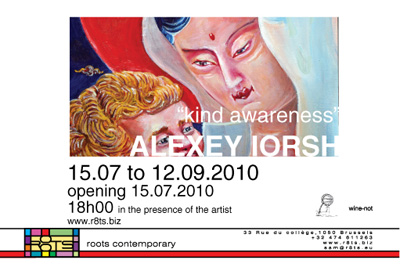
Kind awareness

There is an inner child in every one. There is no human being that does not hide it inside, for the human would not be alive. Even if the man is a tyrant, a dictator, the very same old child presides over his raging and murderous life. It is looking through his adult eyes unwittingly. It looks from the inside – with interest and surprise. And it is this child that suffers from the world’s injustice, its losses and its toughness during life’s long course, afflicted and enforced. Whoever the adult is, whatever he is doing, the child on the inside still suffers and still watches the outside with gentleness and silent questions.

There is an inner child in every one. There is no human being that does not hide it inside, for the human would not be alive. Even if the man is a tyrant, a dictator, the very same old child presides over his raging and murderous life. It is looking through his adult eyes unwittingly. It looks from the inside – with interest and surprise. And it is this child that suffers from the world’s injustice, its losses and its toughness during life’s long course, afflicted and enforced. Whoever the adult is, whatever he is doing, the child on the inside still suffers and still watches the outside with gentleness and silent questions.

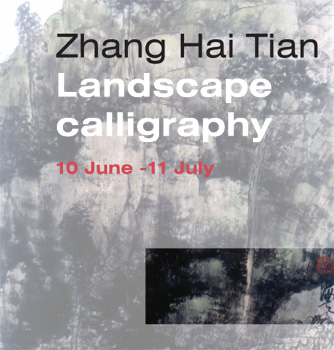
Landscape Calligarphy

 Zhang Han Tian     Press Article

Zhang Hai Tian est le doyen des calligraphes de Shanghai. Né en 1951, il effectue sa formation de peinture traditionnelle dans la ville de Shanghai (Université Jiatong à Shanghai). Lors de la Révolution Culturelle il est envoyé pendant 11 ans dans un camp de travail du Heilongjiang . Il revient dans sa ville natale quand apparaissent les premières lueurs d’une Chine nouvelle. Il affine son art et cherche sa place dans la société en même temps.

THai Tian est le représentant d’un monde de peintres perdu à jamais : «l’univers du lettré ».

Depuis 15 ans il enseigne et conseille la nouvelle génération. Son œuvre est pourtant très solitaire. Dans sa maison des montagnes du Zhejiang il recherche les traits d’antan.Pour la première fois en Belgique Zhang Hai Tian présente, dans l’espace de Roots Contemporary, un projet de paysages contenmporains : Shan Shui (montagne-eau) du Zhejiang.
 read more

New Leningrad

 Zhang Han Tian     Press Article

“The 1920s and ‘30s saw the intensive development of Russian avant-garde architecture, drafted to create an image of a New World: a world in which the working masses built a new domesticity, a new industry, a new education, and a new politics”

That vital aspect of the Russian avant-garde, Soviet Constructivism – or the architecture of the 1920s-30s – does not feature much in central Petersburg. Soviet architectural art is mostly visible in the outskirts of the city, and predominantly as Stalinist architecture dating from the ‘50s.

From 1914 to 1925, very little was built in Petrograd, owing to economic and political factors. There was also a lack of ideas strong enough to permeate the conservative professional circles of the

city. The monarchy favoured orthodox and national traditions; Liberals – neo-classicism and academic art. As for the bourgeoisie, it generally preferred all that was elegant, refined and at the same time rational and practical. By the time the city was renamed Leningrad in 1924, it had not undergone any major change, apart from losing some if its shine.

 read more

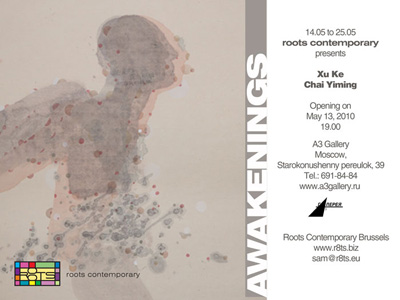
Awakenings

 Xu Ke &  Chai Yiming  Press

In May 2010, Roots Contemporary will be exhibiting two Chinese artists illustrative of the rising Chinese ink painter’s market.

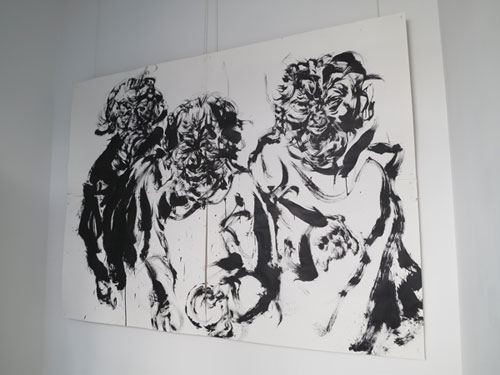
These two artists have in common many years of forbidden representation: Abstract and Erotic. Although they belong to different movements their art has been deeply influenced by the Cultural Revolution. Both where passionate enough to resist and continue against all odds.

More and more calligraphers are seeing this as favorable moment to get known by Chinese Collectors. Many galleries in Shanghai and in the rest of China are featuring Contemporary Calligraphers as a new trend.

After a decay of Pop Art and great success, the Chinese Collectors are finding a way back to their Roots in a contemporary way.

Xu KE and ChaiYiming live and work in Shanghai. They have been exhibited in Roots Contemporary Brussels during the Europalia China 2009-2010 in two solo exhibitions “Utopias’ and “Wasted Generation”.

 read more


Links about this exhibition:

www.a3.artfor.ru

http://www.gogol.ru

http://afisha.yandex.ru

http://www.timeout.ru

http://cao.granit.ru

http://www.proglamour.ru

http://artguide.ru

http://ruffe.livejournal.com

http://mow-china.com

Heritage

 Krotova Dasha    Press Article    Press Article

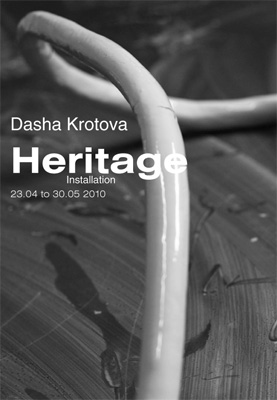
Dasha Krotova focuses on the insignificant things of life, on that which has been lost. For her, the very material with which she works ceramics is precious through its peculiar, extreme fragility. Unlike bronze, marble,and all that which is used to impart longevity to an object, ceramics break easily. Ceramics have a strange type of eternity -that of remains, of the fragment, which the archaeologist will one day find during an excavation.

The fragile and the ephemeral, the insignificant, the every-day suddenly become eloquent as the years and centuries go by. They do not so much speak of the tastes and aesthetics of the time, but rather of mankind itself. Ceramics are a testimony, a sign, burnt clay, malleable material, a metaphor for human flesh itself, which bears marks of time and change.

That which has been discarded, lost, forgotten -in a way this is all about us; these are the traces of our changes and dramas, of our fate, which we try to erase and hide. In our race for eternal youth and beauty, those lost and discarded elements are what we literally eject from our lives and render invisible. Dasha Krotova focuses on the invisible -not in a mystical sense, but rather on the socially invisible. This social “evil” is not the one reported In newspapers. Rather, it is that which we banish from ourselves as antienvironment. Our contemporary lives are being recorded somewhere in a very different script -beyond everyday life. This script is not necessarily alphabetical.

Shanghai 93

 Yang Bahai       Press Article

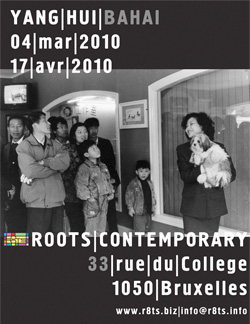
Du 4 mars au 17 avril, la nouvelle galerie Roots Contemporary à Bruxelles exposera une série de photographies de l’artiste chinois Yang Hui-Bahai : cette exposition intitulée « Shanghai 93 » coïncide avec la publication d’un livre du même titre par les éditions « AContre Vue » (Paris) et une conférence le 4 mars à 16h00 au XL Art Communication Center ».

Yang Hui Bahai (Shanghai, 1962), artiste de renom international dont l’influence a marqué l’art abstrait en Chine, travaille entre cette dernière et la France. Peintre de formation, Bahai a fait partie de la nouvelle vague d’art contemporain chinois des années 80. Il s’installa en France en 1989, année à laquelle il fuit son pays. Depuis trois ans, l’artiste est retourné vivre à Shanghai.

Bahai s’est mis à la photographie en revenant dans sa ville natale de Shanghai en 1992. Il s’attache à illustrer les changements d’une ville qu’il croyait sienne et qu’il ne reconnaît plus. Ses photographies, en noir et blanc, sont prises sur le vif au hasard des rencontres.

Cette exposition de photos sera présentée pour la première fois par Roots Contemporary à Bruxelles puis à Paris. Les photos, en tirages argentiques en exemplaire unique, montrent les habitants

d’une Shanghai en mutation ; telle cette jeune femme moderne exhibant avec fierté son petit chien à la mode ou ces réparateurs de ventilateurs riant derrière leur bol de riz. Ces visages saisis il y a 17 ans, sérieux ou non, racontent l’histoire de leur ville. Ils sont autant d’interrogations sur la transformation de la société chinoise.

 read more

Utopia

 Chai Yi Ming

Chai Yiming is like a sorcerer : only when God wakes up in him and gives him the urge to work, does he set to work. He is only a vector , allowing a higher existence to control him.

The multiple worlds which are apparent in Yiming’s works amaze the viewer. In these worlds, reality becomes a fantasy, nothing has anything to do with the profane wor ld and everything evolves in a somnambulistic state. The artist himself then becomes a “waking sleepwalker”, walking in all directions. Or to put it differently, Yiming is a “sleeping” artist : in this sleeping state, he is permanent ly creating. Whenever he leaves daily life behind and enters the unfet tered world of his art , a myriad of images pour out of his chaotic consciousness onto the paper , like snowf lakes falling onto the ground. He then drifts among these aimless images, and this for him is a happy and light-hearted moment .


Wasted Generation

 Xu Ke

Xu ke, a child of Shanghai, was born in 1958. He graduated from the Shanghai Industrial Art School and Shanghai Fine Arts Academy during a time of great chaos. It was not until he was 40 that he was able start his career as an artist. In the intervening years he worked, as best he could, on various things and then eventually as theater set designer in the Cultural Place in Shanghai.

He is typical of the “wasted generation” the generation who lived and grew at the time of the cultural revolution, having to abandon all personal development to serve “the great leap forward”. During that time education was restricted, traditions were no longer perpetuated and lost, and, of course, there was no more “scholar´s desk”.

Toys

Iorsh Alexey

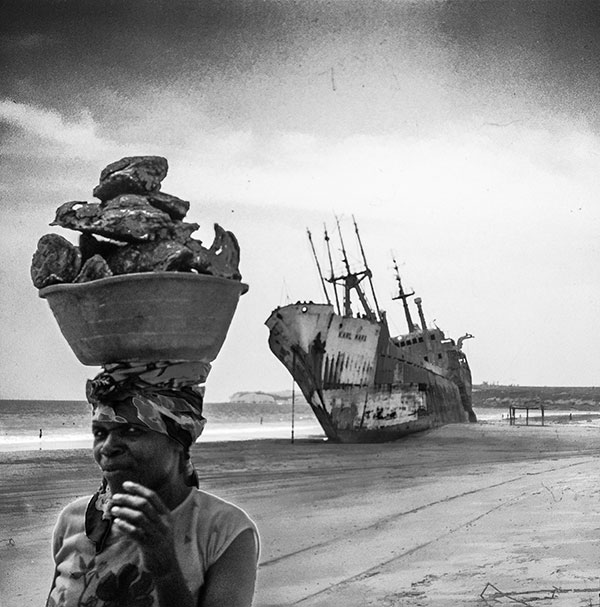
Morning has come. You just woke up. You have not yet opened your eyes and your mind is al ready beginning to create your owne “self”.

Slowly you begin reconst ruct ing the boundar ies of your body, unfolding al l the sensat ions. The whole world arises in your mind, and consciousness embraces the world.
 

 read more

Russian Serigraphs

The production of serigraphic projects in Russia was very small as it came late into the USSR and was quickly replaced by other printing technologies.